

How Long Does Waterproofing Last?
January 20, 2021
How To Waterproof A Concrete Roof?
March 11, 2021What Is The Best Waterproofing Membrane for Showers?
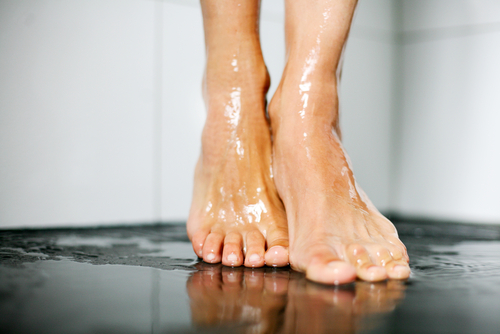
What Is The Best Waterproofing Membrane for Showers? We have come a long way in home renovation and building. When up to 15 years ago it was not unusual to call a drafty house a home and find comfort in thick clothing and extra blankets, we can now turn on the heating in our well-insulated homes at an instance and heat the rooms quickly and efficiently.
However, well-insulated homes also mean that we have less air circulation and more risks of mold and mildew building up especially in wetter rooms such as the bathroom. This requires more careful thought when designing a shower.
Not only do we need to think about venting, but also about the build-up of moisture in the walls and floors. A shower pan might prevent water from getting out of the shower and into the floor, but how about the walls? And what happens, if cracks evolve, or there are leaks?
Grout and mortar between the tiles are not designed to be waterproof either and unfortunately will let water seep through in time. In order to prevent mold and the following decay from happening, there are various waterproofing membranes available to install in the shower before tiling.
So, what is the best waterproofing membrane for showers? In general, there are three types of membranes. All have their advantages and also their disadvantages.
1. Sheet waterproof membrane
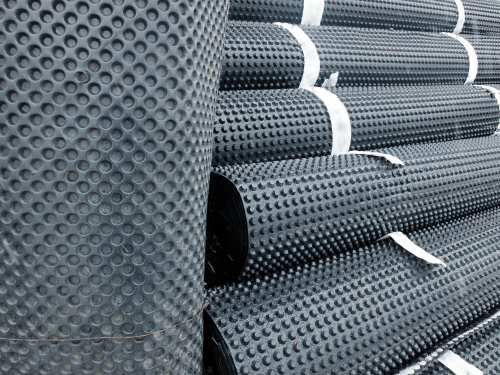
A polyethylene waterproof membrane is a sheet membrane and therefore very simple to use. They come in a roll and line the shower floor and walls to give it efficient waterproofing. You simply apply it to a wet drywall with a thin layer of thinset and that’s it. You can tile the membrane or choose any other shower walling on top of it.
Some brands offer self-adhesive membranes for an even easier application. If you are after an extra crack suppression protection for your tiles, use a Laticrete waterproof membrane fabric underneath.
It is fiberglass fabric in a forced rubber membrane and prevents cracking of the tiles as well as offers perfect waterproofing. You can easily apply the sheet using a liquid membrane as a glue to the surface.
After you have carefully stuck the sheet onto the membrane, apply another coat of liquid membrane to the fabric and let it set before tiling it.
One of its biggest advantage is that you don’t need to worry about applying the right thickness for perfect waterproofing. It can also be applied to mortar sooner than a liquid shower membrane. Unfortunately corners and uneven surfaces make application a little bit tricky.
2. Liquid waterproof membrane
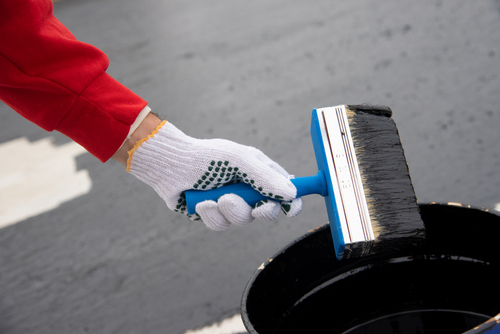
Another option for preventing your shower from leaking is using a liquid membrane, which you simply paint onto the walls and floor. It is a great option for the individually designed shower that has lots of corners and niches or other characteristic unevenness.
There are also different types of liquid membrane depending on what you are after. You can pick one that also functions as a vapour retarder, or covers cracks. Depending on the product you might have to apply various coats of membrane.
Some are also faster drying than others and some require a different surface than others. All in the all-this method is the least complicated to use and you will find the right type for any surface.
You can get an eco-friendly version of a liquid membrane by getting a dry mix to add water to yourself before applying. A mineral based mix is offering all the advantages of a liquid membrane is also a great option for greenbuilding.
3. Foam Backer Boards
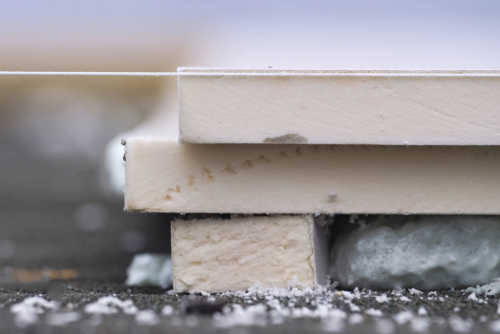
If you want to save time and resources while building your bathroom from scratch – maybe even after you have ripped down previous walls, the foam backer boards might be an option.
They are waterproof panels that can be installed like wall panels and offer a great surface for tiling. A real time-saver and easy to use, especially if renovation works are not a regular thing you do. However, it also has its disadvantages.
The joints of the panels are not automatically waterproof and have to be sealed in order to actually prevent water to get through. You also need to be prepared to pay a little more for this option.


